
Houston T-Bone Accidents: Common Causes, Injuries, and Your Legal Rights
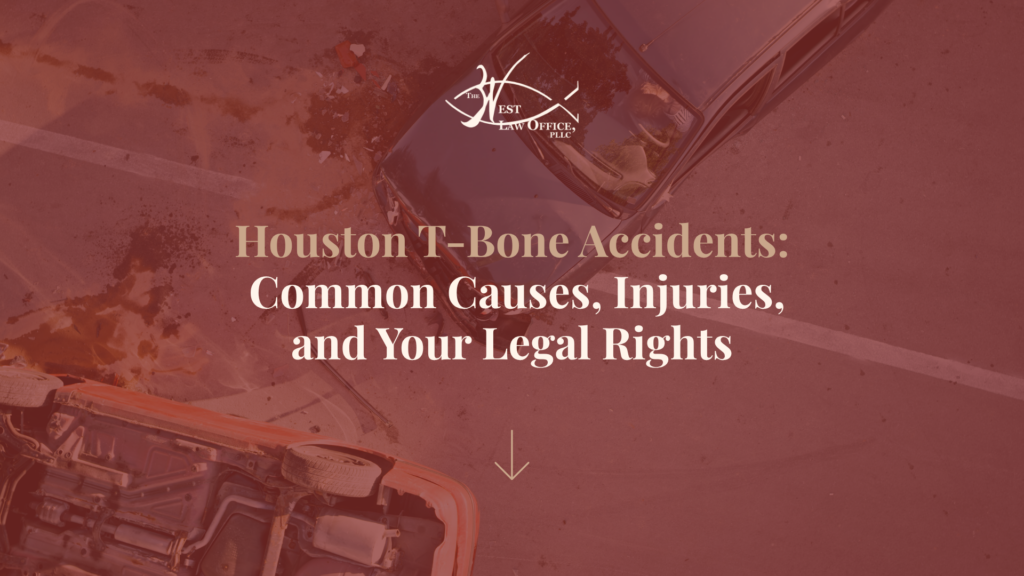
A T-bone accident is one of the most dangerous types of motor vehicle collisions. These crashes occur when the front of one vehicle strikes the side of another, creating the shape of the letter “T.” Because the sides of passenger vehicles offer far less protection than the front or rear, victims often suffer severe or life-changing injuries.
While T-bone accidents can happen anywhere, they are most common at intersections where drivers fail to yield, run red lights, or misjudge the speed of oncoming traffic. Many of these collisions occur in busy Houston intersections and can leave victims facing expensive medical bills, lost income, and a long road to recovery.
At The West Law Office, we help victims of serious T-bone accidents, car accidents, and other motor vehicle accidents pursue the compensation they deserve.
Why T-Bone Accidents Are So Dangerous
Unlike rear-end or head-on collisions, a T-bone crash directs the force of impact into the side of the vehicle where there is much less structural protection. Although modern vehicles include side airbags and reinforced frames, occupants can still suffer catastrophic injuries when another vehicle strikes the driver’s or passenger’s side at high speed.
These crashes frequently occur at busy intersections, on roads with poor visibility, and in areas where drivers fail to obey traffic signals. Learning about the risks associated with intersection accidents and dangerous roads can help drivers better understand how these devastating collisions occur.
Common Causes of T-Bone Accidents
Most T-bone accidents are preventable and occur because one driver fails to follow the rules of the road. Determining exactly what caused the collision is one of the most important steps in establishing liability and recovering compensation.
Some of the most common causes include:
Failure to Yield
Failure to yield the right of way is the leading cause of T-bone accidents. These crashes often occur when a driver runs a stop sign or red light, turns left in front of oncoming traffic, or enters an intersection without ensuring it is safe to proceed.
Distracted Driving
Drivers who text, talk on the phone, adjust their GPS, eat, or take their eyes off the road for even a few seconds can easily miss changing traffic signals or approaching vehicles. A momentary distraction is often all it takes to cause a serious side impact collision.
Impaired Driving
Alcohol and drugs impair judgment, coordination, and reaction time, making it much more likely that a driver will ignore traffic signals or fail to yield. Many serious drunk driving accidents involve side impact collisions because impaired drivers enter intersections without slowing or stopping.
Speeding
Excessive speed reduces the amount of time a driver has to react to changing traffic conditions and significantly increases the force of impact. High-speed T-bone crashes frequently result in catastrophic injuries and extensive vehicle damage.
Drowsy Driving
Fatigue can impair a driver’s ability to concentrate, make decisions, and react to hazards. In severe cases, a driver may briefly fall asleep behind the wheel, leading to a devastating collision.
Driver Negligence
Some T-bone accidents are caused by aggressive driving, failure to obey traffic laws, or reckless lane changes. In other cases, another type of collision, such as a rear-end accident or head-on collision, may contribute to a chain of events that ultimately results in a side impact crash.
Common Injuries Caused by T-Bone Accidents
Because the sides of a vehicle provide less protection than the front or rear, occupants often absorb much of the force during a T-bone collision. Even crashes at relatively low speeds can cause serious injuries that require extensive medical treatment and rehabilitation.
Some of the most common injuries include:
Head and Brain Injuries
The impact of a side collision can cause occupants to strike the window, door, steering wheel, or airbags, resulting in traumatic brain injuries. Many victims suffer concussions, skull fractures, memory problems, or long-term cognitive difficulties.
Neck and Back Injuries
The sudden sideways movement of the body can place tremendous strain on the spine. Victims frequently suffer neck injuries, herniated discs, soft tissue damage, and serious back injuries that may require surgery or ongoing physical therapy.
Chest and Internal Injuries
Seat belts and airbags save lives, but the force of a T-bone crash can still cause broken ribs, collapsed lungs, internal bleeding, and damage to vital organs. Wearing a seat belt greatly improves your chances of avoiding catastrophic injuries, making it important to understand how seat belt use can affect both your safety and your injury claim.
Fatal Injuries
Unfortunately, some side impact collisions are fatal, particularly when they occur at high speeds or involve larger commercial vehicles. Families who lose a loved one in these devastating crashes may have legal options, especially in cases involving a fatal truck accident.
What to Do After a T-Bone Accident
The actions you take after a T-bone accident can have a significant impact on both your recovery and your ability to recover compensation. Seeking prompt medical care is essential, even if you do not believe your injuries are serious. Some conditions, including concussions and internal injuries, may not present symptoms immediately.
If you are able, document the accident scene by taking photographs, gathering witness information, and obtaining a copy of the police report. Following the proper steps after an accident can help preserve valuable evidence and strengthen your claim.
You should also avoid accepting a quick settlement offer before understanding the full extent of your injuries. Depending on the circumstances, you may be entitled to compensation for your medical expenses, rehabilitation costs, lost wages, pain and suffering, and other damages. If the at-fault driver has little or no insurance coverage, your own underinsured motorist coverage may also provide important financial protection.
Contact The West Law Office After a Houston T-Bone Accident
Recovering from a T-bone accident can be physically, emotionally, and financially overwhelming. Between medical treatment, insurance claims, and time away from work, it can be difficult to know where to turn for help.
At The West Law Office, we are committed to helping accident victims hold negligent drivers accountable and pursue the full compensation they deserve. Our legal team will thoroughly investigate your case, gather critical evidence, negotiate with the insurance company, and fight to protect your rights every step of the way.
If you or a loved one has been injured in a Houston T-bone accident, do not wait to learn about your legal options. Contact The West Law Office today to schedule a free consultation with an experienced Houston personal injury attorney. We are here to help you move forward with confidence.
Frequently Asked Questions
1. What is a T-bone accident?
A T-bone accident, also known as a side impact collision, occurs when the front of one vehicle strikes the side of another, forming the shape of the letter “T.” These crashes most commonly happen at intersections and often result in serious injuries because the sides of vehicles provide less protection than the front or rear.
2. Who is usually at fault in a T-bone accident?
Fault depends on the circumstances of the crash, but the driver who failed to yield the right of way, ran a red light or stop sign, or made an unsafe turn is often responsible. An investigation into the accident, witness statements, traffic camera footage, and police reports can help determine liability.
3. What injuries are common in T-bone accidents?
Victims of T-bone accidents commonly suffer concussions, traumatic brain injuries, neck and back injuries, broken bones, internal injuries, spinal cord damage, and chest injuries. The severity of the injuries often depends on the speed of the collision and the location of the impact.
4. What compensation can I recover after a T-bone accident?
Depending on the facts of your case, you may be entitled to compensation for medical expenses, rehabilitation costs, lost wages, reduced earning capacity, property damage, pain and suffering, and other accident-related losses.
5. How long do I have to file a T-bone accident claim in Texas?
In most cases, Texas law allows injured victims two years from the date of the accident to file a personal injury lawsuit. Because evidence can disappear and witness memories fade, it is best to speak with an attorney as soon as possible.
6. Do I need a lawyer after a T-bone accident?
T-bone accidents often involve serious injuries and disputed liability. An experienced personal injury attorney can investigate the crash, gather evidence, negotiate with insurance companies, and fight to recover the full compensation you deserve.
