

Autonomous and Semi-Autonomous Vehicle Crashes
Car accidents claim tens of thousands of lives every year in the United States. Approximately 94% of the fatalities are caused by human error. This is because driving environments are unpredictable. With multiple road users using a variety of different transportation modes, things can get complex on the roadways rather quickly.
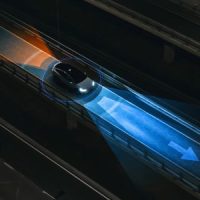
So what happens when the human element is removed? Experts claim that the introduction of autonomous vehicles (AVs) can minimize human errors in the driving environment by using effective detection, consequently reducing traffic accidents, injuries, and fatalities.
However, AVs and semi-autonomous vehicles are not foolproof. Crashes can still occur and when they do, there are questions about what happens next. This is because these vehicles introduce complex liability questions that differ significantly from traditional car accident claims. These cases often involve overlapping responsibilities among drivers, manufacturers, software developers, and third-party data providers.
First, here is a look at vehicle automation levels:
- Level 0 – No Automation: Fully human-controlled
- Level 1 – Driver Assistance: Adaptive cruise control, lane keep assist
- Level 2 – Partial Automation: Examples include the Tesla Autopilot and GM Super Cruise
- Level 3 – Conditional Automation: System drives, human intervenes when prompted
- Level 4 – High Automation: No human input in most scenarios
- Level 5 – Full Automation: No steering wheel or pedals
Legal exposure increases dramatically from Levels 2 through 5.
Common Causes of Autonomous Vehicle Accidents
- Sensor failure (cameras, radar, LiDAR malfunction)
- Software glitches or defective updates
- Inadequate object recognition (pedestrians, cyclists, motorcycles)
- Mapping errors and GPS inaccuracies
- Poor weather performance
- Human overreliance and delayed driver reaction
- System disengagement without sufficient warning
Possible object recognition failures are also concerning. Systems in AVs may fail to detect the following:
- Pedestrians in low light
- Children
- Motorcycles
- Road debris
- Emergency vehicles
- Animals
Evidence and Liability
Strong evidence will be needed to prove your case in an accident. AVs often have evidence such as:
- Event Data Recorder (EDR) logs
- Telematics and telemetry data
- Software version history
- AI decision logs
- Vehicle camera recordings
- Over-the-air update records
- Driver monitoring system data
So this begs the question: Who is liable if an autonomous vehicle causes a crash? Liability may extend to the driver, vehicle manufacturer, software developer, sensor supplier, fleet operator, or multiple parties depending on system function and driver involvement at the time of the crash.
Manufacturers can be sued for software defects. Software defects fall under product liability law and may support claims for defective design, failure to warn, or negligent programming.
Drivers can still be responsible in semi-autonomous crashes. Most Level 2 and 3 systems require active human supervision, exposing drivers to partial or full liability.
Contact a Personal Injury Lawyer
Autonomous vehicles remove the human error element of driving, but the truth is that serious car accidents can still occur.
These cases can be complicated, but Sue West, a Houston auto accident attorney from The West Law Office, PLLC can assist you. Let us guide you through the process and get you the best outcome possible. To schedule a consultation with our office, fill out the online form or call (281) 347-3247.
Source:
sciencedirect.com/science/article/pii/S2352146523012231
