
What Are Stacked Impact Crashes?
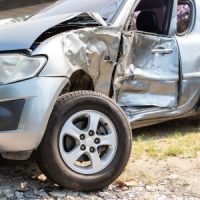
You have probably seen a stacked impact crash during your everyday travels. A stacked impact crash has many other names, such as secondary collision, chain-sequence collision, or multi-phase impact. These accidents occur when a vehicle is involved in two or more consecutive impacts, often within seconds. Unlike a typical multi-car pileup where many vehicles hit each other at once, a stacked impact crash involves one vehicle experiencing multiple, distinct collisions, each with its own cause, force, and injury implications.
Because multiple high-energy forces occur in quick succession, injuries tend to be more severe, including traumatic brain injuries, spinal fractures, disc herniations, crush injuries, and internal organ damage. These cases are complex because every impact can create a separate set of liability and causation questions. Here is a look at these crashes in more detail.
How Stacked Impact Crashes Happen
Common scenarios include:
- Initial rear-end collision followed by a secondary hit. A stopped or slowed vehicle is hit from behind, pushed into traffic, and then struck again by another vehicle approaching at higher speed.
- Vehicle thrown into another lane or barrier. After a first impact, the vehicle rotates, crosses lanes, or spins, and then is hit again or hits a structure, such as a guardrail, median, or tree.
- Commercial truck override. A large truck hits a smaller vehicle, partially climbs over it (override), and the vehicle is then hit again as it’s crushed or pushed forward.
- Motorcycle stacked impacts. Riders often experience a vehicle impact, then ground impact, and sometimes a secondary strike from another vehicle.
- Secondary collision from traffic reaction. A vehicle is struck, comes to rest in the roadway, and is hit a second time by another driver who cannot stop in time.
Why Stacked Impacts Are Complicated
- Multiple impacts mean multiple liability questions. Each collision may involve a different at-fault driver, different negligence standards, and potential for comparative fault. Courts must often determine whether the second impact was foreseeable or caused by a new act of negligence.
- Injury causation becomes harder to prove. Attorneys and insurers must determine which impact caused which injuries, whether injuries from the second impact aggravated those from the first, and whether the injuries would have occurred “but for” the stacked sequence. Biomechanical experts and crash reconstructionists often become essential.
- Insurance coverage questions. Stacked impacts can trigger multiple bodily injury liability claims, disputes over policy limits (especially if the first driver is underinsured), uninsured motorist coverage when a hit and run vehicle causes the secondary impact, and bad faith allegations if insurers delay or dispute which impact caused the primary injury.
Contact a Personal Injury Lawyer
Multi-car accidents can be legally complex and result in serious injuries. It is important to seek legal help in these cases.
A Houston car accident attorney from The West Law Office, PLLC can help determine liability so you get the compensation you deserve. Schedule a consultation today by calling (281) 347-3247 or filling out the online form.
Source:
forbes.com/advisor/legal/auto-accident/multi-car-accident/