How Fault is Divided Among Multiple Drivers in a Crash
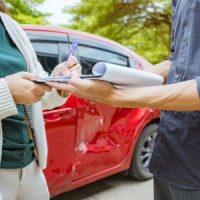
When there are multiple vehicles involved in a car accident, it is possible that more than one party can be held liable for causing the crash. This is especially common in chain reaction crashes.
When multiple drivers are involved in a crash, fault is divided through a process called proportionate responsibility. The goal is to determine how much each party’s actions contributed to the accident and assign a percentage of responsibility accordingly.
Under Texas’ Civil Practice and Remedies Code Chapter 33, multiple people can be found liable for a crash. A person who is at fault can still recover compensation as long as their own percentage of responsibility is not greater than 50%.
A defendant may seek to designate another person or entity (a responsible third party) who allegedly caused or contributed to the injury/harm. The jury must allocate a percentage of responsibility (in whole numbers) to each relevant party: the claimant, each defendant, each settling person, and each designated responsible third party. If the claimant’s fault is less than 50%, then their recovery is reduced by their fault share. A defendant is generally responsible only for their fault proportion.
How Does it Work?
- Evidence review. Investigators, insurers, or the court examine evidence such as police reports, witness statements, vehicle damage, dashcam footage, and expert reconstructions.
- Assigning percentages. Each driver receives a share of fault. For example, Driver A may be 70% at fault, while Driver B is 30% liable. These percentages must total 100%.
- Damage reduction. If a driver is partially at fault but under the 50% threshold, their compensation is reduced by their percentage of fault. For example, if a plaintiff is 30% responsible for a $100,000 loss, they can recover $70,000.
- Multiple defendants. Each defendant typically pays only their proportionate share unless one is found more than 50% at fault. In that case, that party can be held jointly and severally liable for the entire judgment.
- Settlement impact: If one driver settles, their share of liability reduces the remaining defendants’ exposure proportionally.
Example
Imagine a three-car accident on a Texas highway:
- Driver A rear-ends Driver B while texting.
- The impact pushes Driver B into Driver C, who was stopped at a red light.
- Investigation shows Driver B was following too closely but wasn’t on the phone.
After reviewing the evidence, the jury assigns fault as follows:
- Driver A: 70% at fault (texting, initial impact)
- Driver B: 20% at fault (following too closely)
- Driver C: 10% at fault (partially blocking the lane)
Total = 100% fault allocation
Contact a Personal Injury Lawyer
Chain-reaction and other multi-vehicle crashes can be tricky when it comes to assigning liability. More than one person can be at fault and all might still be able to recover compensation.
Injured in a crash? Get the help you need from a Houston car accident attorney from The West Law Office, PLLC. We will give you the best legal advice possible for your case. Fill out the online form or call (281) 347-3247 to schedule a consultation.
Source:
statutes.capitol.texas.gov/docs/cp/htm/cp.33.htm